
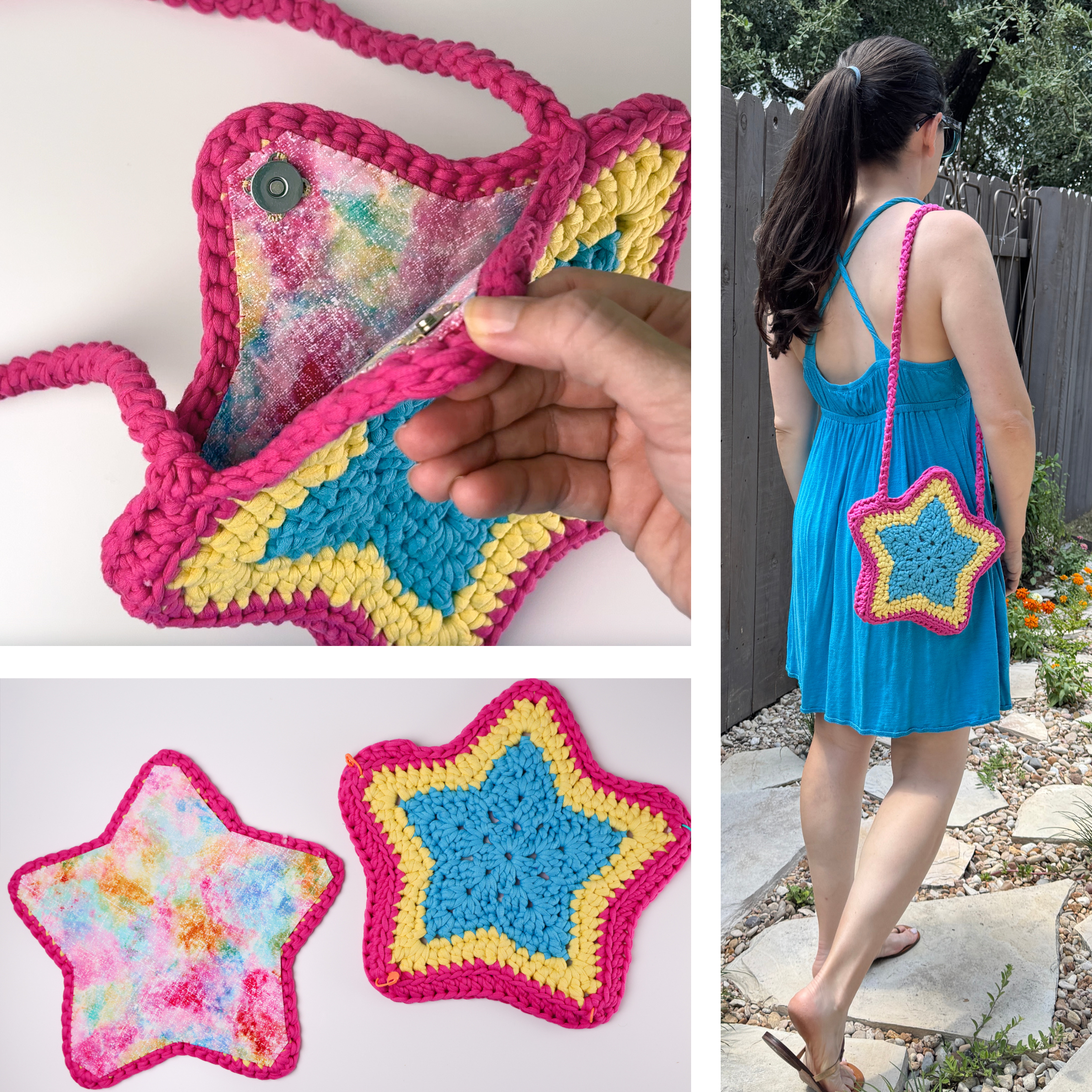
Adding a fabric lining is one way to give a crochet bag a more structured, professional look. It can be relatively straightforward when you’re working with a simple rectangle or square, but uniquely shaped purses – like our Star Purse, Heart Purse, and Flower Purse for example – need some special attention. Their curved edges and different silhouettes can make it difficult to fit a perfect bag insert, but they’re often ones that benefit most from added structure.
In this blog post, I’ll show you exactly how I lined my crochet Star Purse using fusible interfacing and a cotton fabric lining to keep the sides of my purse nice and sturdy. The lining’s primary job is to add structure and support to each side rather than act as a stand-alone fabric bag. The same process can be adapted for many other crochet bags with similar construction!

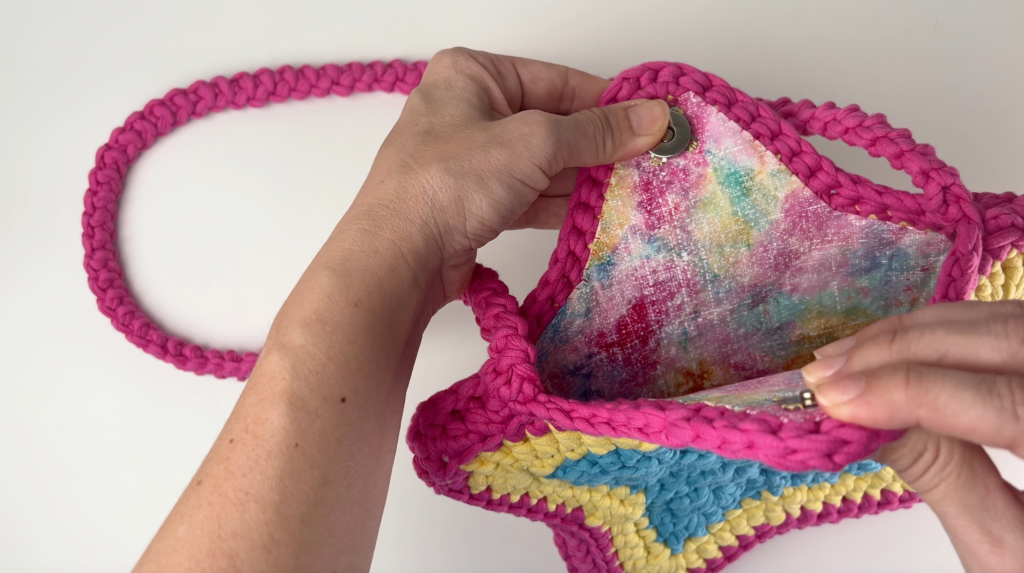
So what is fusible interfacing? It’s a material that’s designed to bond to fabric with heat, creating a firmer fabric without adding a lot of bulk. It’s commonly used in sewing projects like bags, collars, and home decor, and it works especially well for crochet purses because it helps the fabric lining support the shape of the bag while still remaining flexible.
There are a lot of different brands and types to choose from, but it can be found at most craft stores or on Amazon. Our favorites are linked in the materials section below.
If you’ve been wondering how to add structure to a crochet purse without making it overly complicated, this beginner-friendly method is a great option. You don’t need advanced sewing skills, just a few basic materials!
This post may contain affiliate links. We only recommend products we would use ourselves and all opinions expressed here are our own. Read our full privacy policy and disclosures here.
Materials Needed
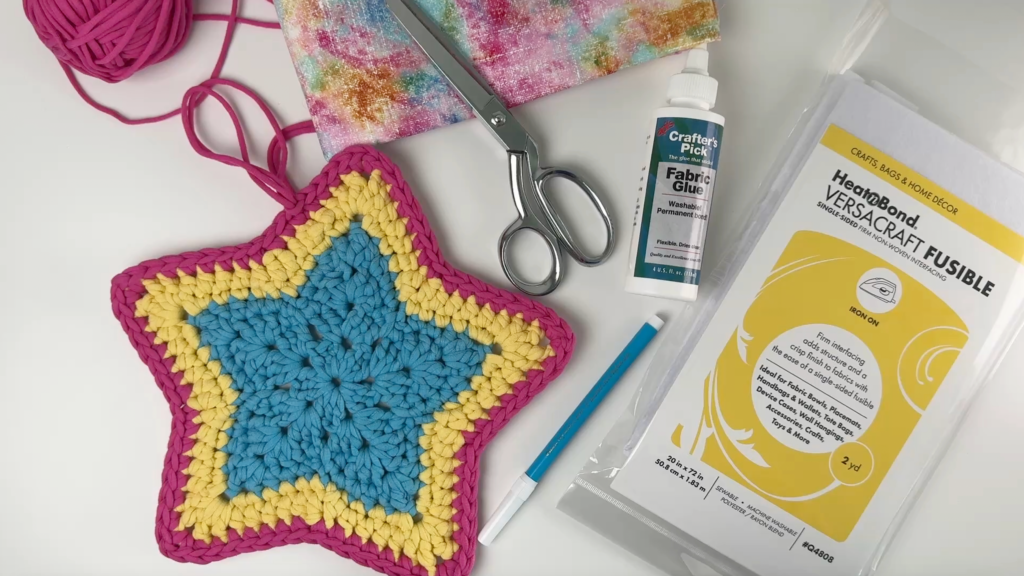
- Crochet Bag (before joining) – we’re using the Star Purse Pattern
- Cotton Fabric
- Fusible Interfacing
- We like Heat N Bond’s Firm Fusible Interfacing & Heavy Weight Fusible Interfacing
- Fabric Glue – flexible, permanent, and washable adhesive
- We used Crafter’s Pick
- Fabric Scissors
- Fabric Marker – we use these water soluble ones
- Optional: needle & thread
Watch the full video tutorial here, or keep reading for the photo tutorial!
Bag Lining Photo Tutorial
If you’re following along with the Star Purse pattern, you’ll begin lining right after you finish Round 7, before adding the Round 8 Edge and before joining. Keep the yarn attached, or cut it and reattach after adding the lining.
If you’re working with your own bag, we recommend adding this lining before joining your two bag panels.
Step 1: Cut Your Interfacing
First, trace the outline of the bag with a fabric marker. Since I’m still adding the edge to the purse and joining the sides together, I traced between Round 6 & 7. I want my lining to be slightly smaller than the bag and this will be enough to keep the sides of the purse firm.

The bag should be wrong side facing up, and the interfacing should be fusible-side facing up to get the most accurate outline. This is especially important for bags with a unique shape because you want to match the shape and orientation, rather than a mirrored version.
Then, cut along the outline.
Step 2: Iron the Interfacing to Fabric
Next, follow your interfacing instructions to fuse it to the wrong side of your cotton fabric. The one I used calls for high heat (cotton/linen setting) and NO steam.

Make sure the fusible side of the interfacing is facing the wrong side of the fabric and leave a little extra space around it. I placed a thin towel between the interfacing and iron to be extra careful and ironed it until it was completely bonded, making sure not to keep it in one spot for longer than 10 seconds. If you have high-heat capabilities, then it gets done rather quickly, but if your iron does not get hot enough, this could take some time.

Step 3: Cut, Fold, & Glue the Fabric to the Interfacing
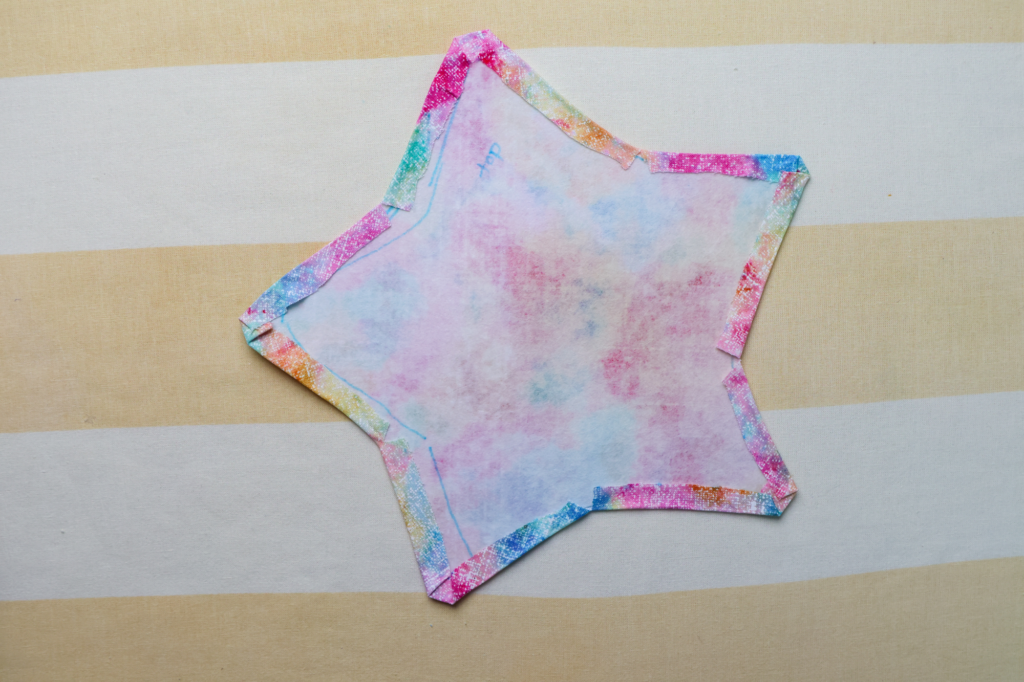
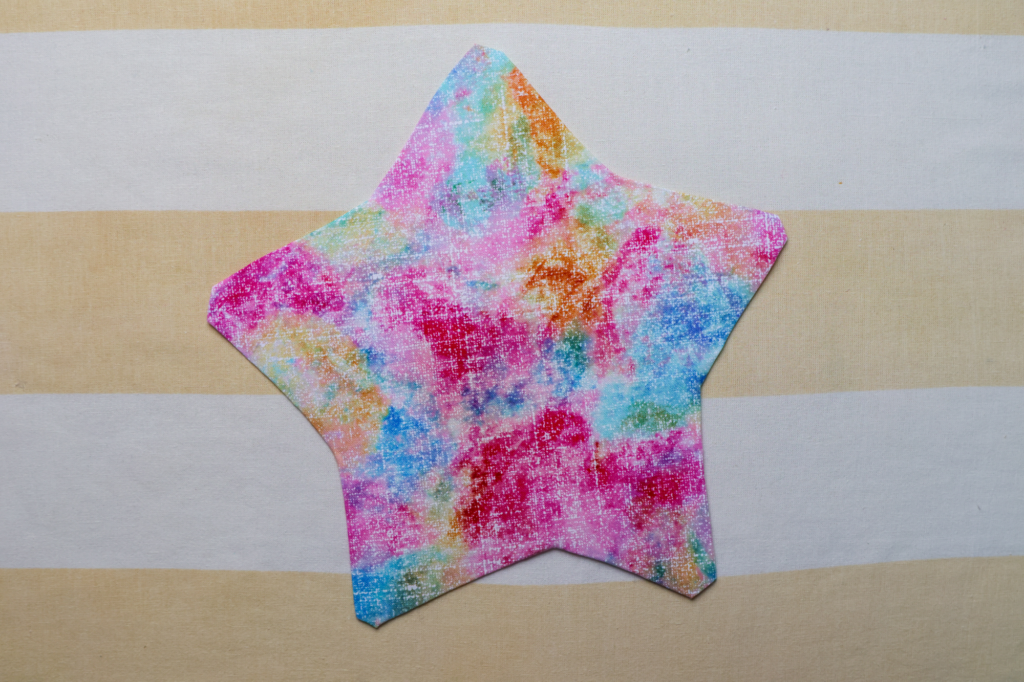
Once it’s cooled down, cut around the fabric, about 1/2 inch away from the interfacing. I used a ruler & marked mine all the way around to make it easier.
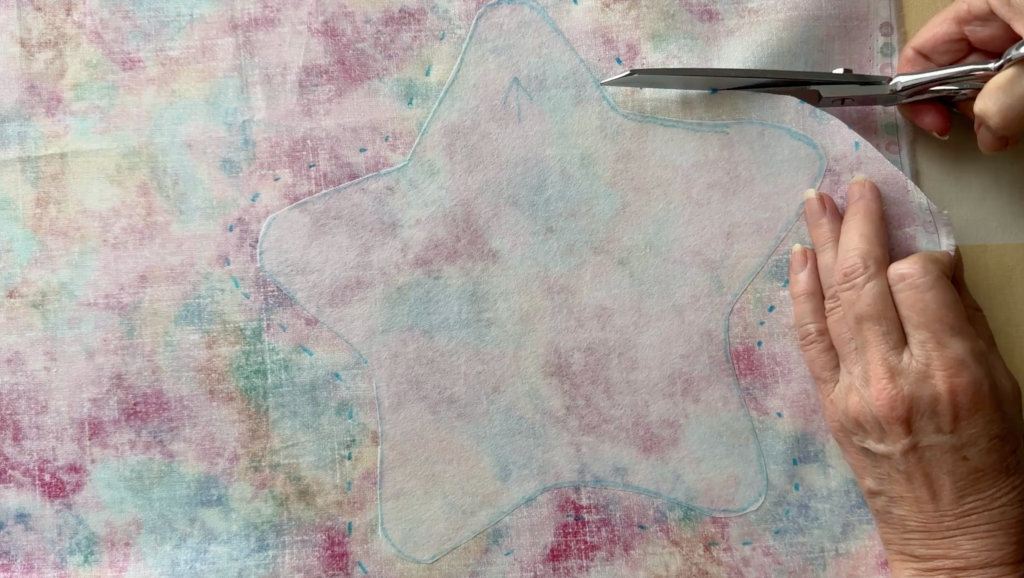
Then, cut in the star creases so you can fold the fabric over the edge of the interfacing. This gives the lining a clean edge that won’t fray! To make it easier, you can iron down the fabric edges first if you want. Then, use fabric glue to secure the fabric to the interfacing.

Step 4: Glue and/or Hand Sew the Lining to the Bag
Spread fabric glue on the wrong side of the bag, covering only the areas your lining will fit. The fabric glue I used is very strong and permanent and dries clear, but I made sure to get the edges and avoided any big holes in my stitches. The lining isn’t carrying the weight of the purse or supporting the seams on its own. Those jobs are still handled by the crochet fabric and the assembly of the bag. The glue simply bonds the reinforced fabric to the inside of each crochet panel, keeping everything securely in place without the need for extensive sewing.

If you prefer to hand sew, you can skip the glue altogether and stitch it directly to the bag. I ended up doing that along the top point of the bag to add even more security to the lining.
Watch the tutorial for a better look at how I did that!

Step 5: Repeat & Finish the Bag!
Repeat for the other side of the bag. If you used fabric glue, leave the sides alone to dry for 24 hours to make sure the glue completely dries and bonds before continuing.
If you’re making the Star Purse, you’ll pick up where you left off and finish Round 8 and join the sides!

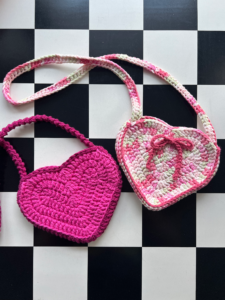
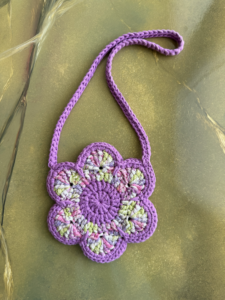
Check out our other bag patterns & tutorials:
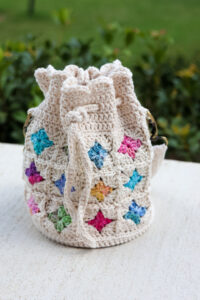



Surface Slip Stitch & Granny Square Joins
Granny Square Zipper Bag
No responses yet